
|
Getting your Trinity Audio player ready...
|
Choosing the right URL structure is one of those decisions that quietly shapes the future of your website. It may look like a small technical detail, but whether you use a subdomain or a subdirectory can influence your SEO performance, content growth, user experience, and even how easy your site is to manage over time.
This guide is written for website owners who want clarity, not jargon. We’ll explore what subdomains and subdirectories really are, how search engines treat them, and how to decide which structure fits your goals.
What Is a Subdomain?
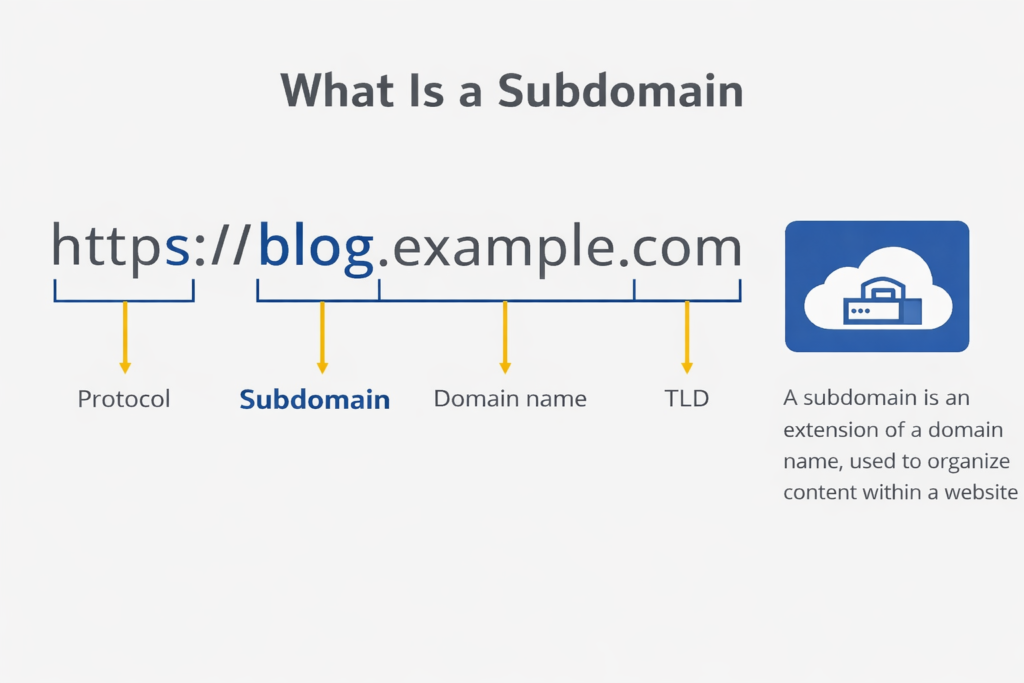
A subdomain is a part of your main domain that exists before the root domain name. It creates a distinct section of your website that can function almost like a separate site.
Examples:
- blog.example.com
- shop.example.com
- support.example.com
From a technical standpoint, subdomains are configured through DNS settings. This means they can run on different servers, use different content management systems, or even be handled by different teams.
For many businesses, subdomains are appealing because they offer clear separation. A blog, help center, or application can live on its own without interfering with the main website’s structure.
However, that separation also means subdomains are often treated as independent properties by search engines, which has important SEO implications.
What Is a Subdirectory?
A subdirectory (also called a subfolder) is part of the main website and appears after the domain name in the URL path.
Examples:
- example.com/blog
- example.com/shop
- example.com/resources
Subdirectories live under the same domain and server environment as the rest of the site. They are considered extensions of the main website rather than separate entities.
This structure is common for blogs, knowledge bases, product categories, and other content that directly supports the core purpose of the site.
Because everything sits under one domain, subdirectories naturally share authority, trust signals, and backlinks.
Subdomain vs Subdirectory: Core Differences
Understanding the fundamental differences makes the decision much easier.
URL Structure
Subdomains place content before the main domain, while subdirectories place content after it. This small visual difference signals a much bigger structural change to both users and search engines.
Technical Setup
Subdomains usually require DNS configuration and may involve separate hosting or CMS installations. Subdirectories are simpler and live within the existing site setup.
Site Identity
Subdomains often feel like separate websites. Subdirectories feel like part of the same website experience.
How Search Engines View Subdomains and Subdirectories
Search engines are capable of crawling and indexing both structures effectively. In theory, either option can rank well if implemented properly.
In practice, there is an important distinction.
Subdirectories typically inherit authority from the root domain. When your main site earns backlinks and trust, pages inside subdirectories benefit from those signals.
Subdomains, on the other hand, are frequently treated as separate entities. They can rank, but they often need to build authority more independently.
This difference explains why many SEO professionals prefer subdirectories for content that supports the main website’s goals.
SEO Benefits of Using Subdirectories
Subdirectories offer several advantages that align well with long‑term SEO growth.
Shared Authority
All pages under a subdirectory benefit from the domain’s existing backlinks and reputation. This makes it easier for new content to rank faster.
Stronger Internal Linking
Internal links between pages naturally strengthen topical relevance when everything exists under one domain.
Easier Tracking
Analytics, Search Console data, and performance monitoring are simpler when all content lives under a single property.
Faster Indexing
Search engines tend to discover and crawl subdirectory content more efficiently because it’s clearly connected to the main site.
SEO Challenges of Subdomains
Subdomains are not inherently bad for SEO, but they come with trade‑offs.
Separate Authority Building
Subdomains often need their own backlink profiles and content strategies to perform well in search results.
Fragmented Signals
When authority is split across multiple subdomains, the main site may lose some of its consolidated strength.
Higher Maintenance
Each subdomain usually requires its own SEO setup, tracking, and optimization efforts.
These challenges don’t make subdomains wrong they simply make them more suitable for specific use cases.
When Using a Subdomain Makes Sense
Subdomains are best used when separation is intentional and necessary.
Distinct Services or Products
If part of your website functions as a standalone product or service, a subdomain can help isolate it technically and strategically.
Different Platforms or Technologies
When sections of your site rely on different software stacks or hosting environments, subdomains offer flexibility.
Regional or Language Variations
Some international websites use subdomains to separate content by country or language when markets differ significantly.
Large‑Scale Portals
Support centers, forums, or web applications often perform better on subdomains due to their complexity.
When a Subdirectory Is the Better Choice
For most websites, subdirectories are the practical and SEO‑friendly option.
Content Marketing and Blogs
Blogs work exceptionally well in subdirectories because every article strengthens the main domain’s authority.
Resource and Knowledge Centers
Guides, tutorials, and documentation benefit from being closely tied to the core site.
E‑commerce Categories
Product categories and collections often perform better when they live under the same domain structure.
Small to Medium Websites
If your site is growing steadily but not operating multiple independent systems, subdirectories keep things simple and scalable.
User Experience Considerations
Structure affects how users perceive and navigate your site.
Subdirectories provide a seamless experience. Visitors feel like they’re moving through one cohesive website.
Subdomains can sometimes feel like a transition to a different site, which may reduce trust or increase bounce rates if not handled carefully.
Clear navigation, consistent branding, and thoughtful internal linking can reduce these issues but structure still matters.
Performance and Maintenance Factors
From a management perspective, subdirectories are easier to maintain.
You manage one CMS, one analytics setup, one SEO strategy, and one security configuration.
Subdomains increase flexibility but also increase responsibility. Each one may require separate updates, monitoring, and optimization.
For teams with limited resources, simplicity often leads to better long‑term results.
Can You Use Both Together?
Yes and many large websites do.
A common approach is:
- Core content in subdirectories
- Specialized tools or platforms on subdomains
The key is consistency and purpose. Every structural decision should support a clear goal.
Migration Considerations
Switching from a subdomain to a subdirectory or the other way around requires careful planning.
301 redirects, internal link updates, and proper indexing signals are essential to avoid traffic loss.
Migrations should always be handled cautiously, ideally during periods of stable traffic and with close performance monitoring.
Key Takeaways for Website Owners
- Subdirectories are usually better for SEO, authority building, and unified branding.
- Subdomains are useful when content needs technical or strategic separation.
- Search engines can rank both, but implementation quality matters more than structure alone.
- Choose based on long‑term goals, not short‑term convenience.
Subdomain vs Subdirectory Comparison
| Feature | Subdomain | Subdirectory |
|---|---|---|
| URL Structure | blog.example.com | example.com/blog |
| SEO Authority | Built separately | Shared with main domain |
| Search Engine Treatment | Often treated as a separate site | Treated as part of the main site |
| Technical Setup | Requires DNS and possible separate hosting | Simple setup within existing site |
| Content Management | Can use different CMS or platforms | Uses the same CMS and infrastructure |
| Analytics & Tracking | Usually tracked separately | Tracked under one property |
| Best Use Case | Apps, support portals, regional sites | Blogs, resources, product categories |
| Maintenance Effort | Higher | Lower |
Final Thoughts
The choice between a subdomain and a subdirectory is not about following trends it’s about alignment. When your structure matches your content strategy, technical setup, and user expectations, everything works more smoothly.
For most website owners, subdirectories offer a strong foundation for growth. But when complexity demands separation, subdomains remain a valuable tool.
The best structure is the one that supports clarity, consistency, and sustainable success.
FAQs
Is a subdomain bad for SEO?
No. Subdomains can rank well, but they usually need their own SEO and authority.
Does Google prefer subdirectories over subdomains?
Google treats both equally, but subdirectories often perform better because they share domain authority.
Should a blog be on a subdomain or subdirectory?
A subdirectory is usually better, as it helps blog content benefit from the main site’s SEO strength.
Can I use both subdomains and subdirectories on the same site?
Yes. Many sites use subdirectories for core content and subdomains for tools or platforms.
Is it hard to move from a subdomain to a subdirectory?
It can be, but proper redirects and planning help prevent traffic loss.